Active Recall with Flashcards: A Simple Study Routine
Use flashcards for active recall with a repeatable routine for exams, definitions, formulas, and other material you need to remember.
Posted by
 SwiftStudy Team
Related reading
How to Make Effective Flashcards
A practical guide to writing clear flashcards that test one idea, encourage active recall, and stay useful as you learn.
How to Use Flashcards for Language Learning
Learn how to build vocabulary flashcards with useful context, pictures, and focused prompts instead of memorizing isolated word lists.
Active recall starts before the card flips
Reading a question and immediately checking the back can feel productive because the answer looks familiar. Active recall asks you to pause and retrieve it first. Say the answer, write it, picture it, or explain it in your own words. Only then reveal the card and compare.
A four-step routine
- Choose one focused stack rather than every subject at once.
- Read the cue and commit to an answer before flipping.
- Mark the result honestly based on the essential information.
- Finish the session, then return later instead of immediately looping forever.
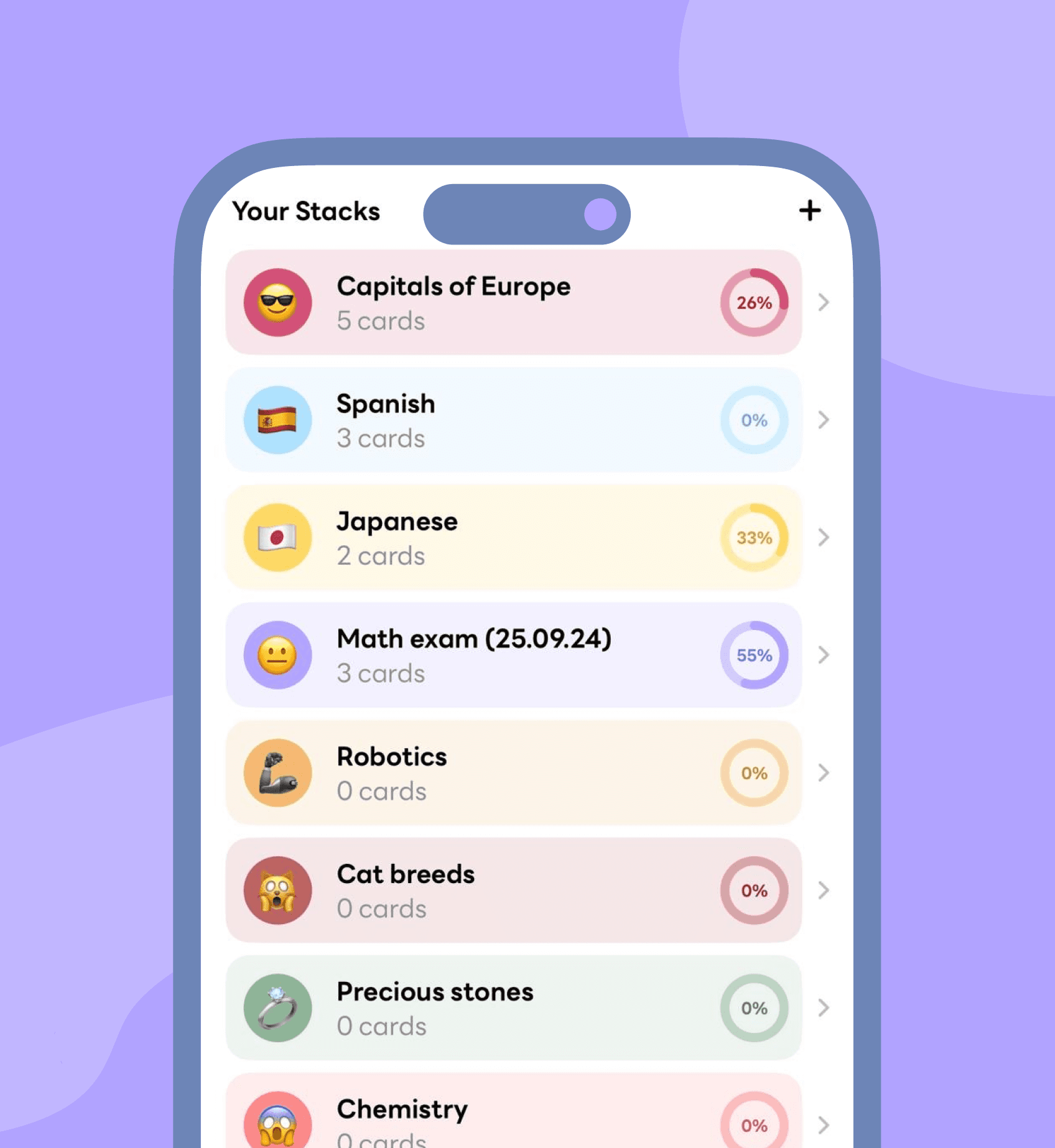
SwiftStudy keeps that interaction deliberately small: flip, choose “Knew it” or “Didn’t know,” and continue. Cards move through four mastery levels so you can see which material still needs attention.
Use the right card for the subject
Definitions work well as direct questions. Formulas are better when the prompt tells you what the variables represent or when the formula applies. Processes can be split into ordered steps. Diagrams and visual material benefit from image prompts. The card format should match the kind of retrieval the exam or real task will require.
Make consistency easier than avoidance
Keep the daily target realistic, attach it to an existing routine, and stop while the process still feels manageable. SwiftStudy tracks study streaks without requiring an account, so the reminder stays lightweight. Learn more about the iPhone and iPad flashcard workflow.